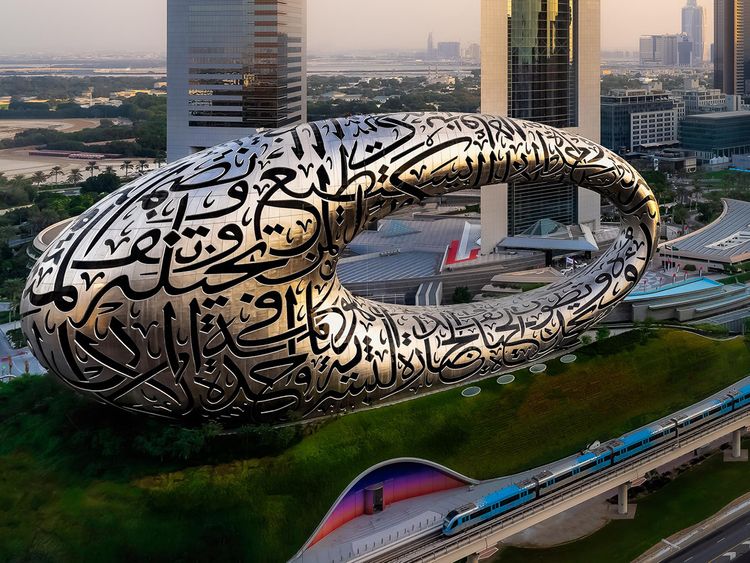
This means anyone travelling to Dubai later in 2026 should check their itinerary carefully, especially if the museum is one of the attractions they are most keen to experience. The current exhibitions remain available before the work begins, and the museum's official website was still advertising admission and ticket bookings on 12 August 2026. The National reports that the closure forms part of a long-planned overhaul rather than an emergency repair or permanent shutdown. Calling it a renovation is understandable, though exhibition renewal is a more accurate description of the work announced so far. The stainless-steel exterior will remain an important Dubai landmark, while the main changes will take place inside the building. Visitors can expect the familiar architecture to return with a completely different set of experiences once the museum begins its next chapter. What has been announced about the closure? The central announcement is clear: the Museum of the Future will close to visitors in mid-September 2026 and reopen with a new generation of exhibitions during the first quarter of 2027. Every major exhibition inside the museum is due to be replaced, making this a much deeper change than the periodic maintenance that visitors may associate with temporary attraction closures. The museum intends to introduce a renewed identity, a revised narrative and experiences that respond to scientific, social and technological developments expected to affect everyday life in the coming decades. Gulf News also describes the project as the museum's first major exhibition overhaul since its 2022 opening. Details about the new exhibition names, floor layouts, programmes and individual installations remain limited, so claims that specific attractions will return in an upgraded form would currently be speculative. The confirmed direction points towards a fresh visitor journey rather than a simple refurbishment of the existing rooms. Travellers should also separate this news from stories about other Dubai attractions that have closed for maintenance, since the Museum of the Future has its own schedule and reopening plan. As of 12 August 2026, its official website still welcomes visitors and offers ticket booking. The practical message is simple: the museum is operating before the announced September closure, while visits planned from mid-September onward require closer monitoring. Closure and reopening timeline The available timeline has three important stages. The museum continues to operate with its original exhibition journey before work begins in mid-September 2026. It will remain closed while the exhibition spaces are cleared, redesigned, installed and tested. The museum plans to welcome visitors back during the first quarter of 2027, meaning sometime between January and March if the project follows the stated schedule. An exact final day of operation has not been published, and neither has a confirmed reopening date. This distinction matters because “mid-September” describes a general period rather than a bookable deadline. A traveller should avoid guessing that 15 September will be the final operating day, since the actual date could fall before or after it. The museum's fifth anniversary arrives on 22 February 2027, and reports indicate that the relaunch is planned around that milestone, though no source has confirmed that the museum will reopen on the anniversary itself. The National specifically notes that both exact dates remain unannounced. Travellers visiting Dubai between September 2026 and March 2027 should therefore treat the museum as potentially unavailable until their chosen date appears in the official booking system. Flexible planning will be far more useful than relying on an estimated reopening week. Why is the Museum of the Future closing? The Museum of the Future explores possible developments in technology, space, ecology, health and society. Those subjects can change quickly, which creates an unusual challenge for a museum whose content is meant to feel ahead of the present. An exhibition about emerging technology may appear fresh when it opens, then feel familiar after visitors encounter the same ideas in everyday devices, news reports and workplaces. The announced closure gives the institution enough time to reconsider the full experience instead of changing one small display at a time. According to the museum's own help information, its exhibitions are regularly reviewed and are intended to be updated or replaced over time. The closure therefore fits the museum's existing operating philosophy, even though the scale of this particular change is much larger. Emirates News Agency reported in June 2026 that the museum was preparing deeper and more interactive experiences focused on scientific and technological shifts that may reshape economies, communities and daily life. This explanation also helps correct the impression that the building has suddenly developed a major structural problem. The public announcements focus on content, identity and the visitor journey. No verified announcement reviewed for this article describes the closure as a response to a structural failure involving the museum's distinctive torus-shaped building. The first major renewal of its exhibitions The renovation will close the chapter on the experiences that introduced millions of visitors to the museum after its February 2022 opening. The current journey includes the OSS Hope space-station simulation, the Heal Institute's imagined ecological research environment, Al Waha's wellness experience, Tomorrow Today's technology displays and Future Heroes for children. Together, these exhibitions helped establish the museum as a mixture of immersive theatre, speculative design, science communication and family entertainment. They were also designed around a particular vision of the future formed before and during the museum's opening period. Four years later, subjects such as generative artificial intelligence, robotics, climate adaptation, biotechnology and commercial space activity occupy a different place in public conversation. Replacing the main experiences gives the curatorial team room to respond to that shift without forcing new ideas into an old route. The National reports that all major exhibitions will be replaced and that the relaunch will introduce a renewed narrative and identity. The scale of the work means returning visitors should expect more than updated screens, revised labels or a few new prototypes. The exact balance between science, storytelling and entertainment remains to be revealed, but the stated plan amounts to a new generation of the museum's interior experience. Why a museum about the future must keep changing A conventional museum can preserve an ancient object for generations because its historical importance does not depend on staying current. A museum built around possible futures faces the opposite pressure. Its central questions move whenever science advances, a new technology reaches consumers or society changes how it thinks about work, health, nature and identity. Imagine opening a technology exhibition shortly before a major change in artificial intelligence, then asking visitors to treat that older display as a reliable map of what comes next. The room may still look impressive, yet its questions can lose urgency. The Museum of the Future has responded by treating change as part of its identity rather than viewing its opening exhibitions as permanent fixtures. Mohammad Abdullah Al Gergawi, Chairman of the Museum of the Future, said that “ideas capable of changing people's lives may come from anyone, anywhere in the world” when announcing the institution's public call for new concepts. Emirates News Agency reported that the next phase would examine major shifts expected to influence the coming decades. This model gives the museum a chance to behave more like an evolving platform than a finished collection. Its relevance will still depend on the quality of the new ideas, the clarity of the storytelling and how well the exhibits reward both curious children and informed adults. What will change during the renovation? The most significant confirmed change is the replacement of every major exhibition. Visitors who have previously completed the museum's current route should encounter a substantially different experience after the reopening, although the public areas, architectural identity and exact floor configuration have not yet been described in full. The museum has said that the next visitor journey will be deeper, more immersive and highly interactive. It will explore scientific and technological developments alongside the opportunities and difficult questions those developments may create. This suggests a shift towards experiences that ask visitors to make choices, test ideas or consider consequences instead of simply observing imagined inventions. The museum is also working on a renewed narrative, which means the different floors may connect through a new story or central question. No reliable source has yet published a complete list of replacement exhibitions, so early articles should avoid inventing attractions based on broad themes such as artificial intelligence or space. The museum may eventually address those subjects, but the confirmed announcement remains wider. What we do know is that the old journey will end, the replacement will cover the main exhibition spaces, and public contributions have informed the planning process. Further programme and exhibition announcements are expected before the reopening. Until those details arrive, the safest description is a complete exhibition overhaul designed to create a new Museum of the Future visitor journey. Every major exhibition will be replaced Replacing every major exhibition requires more work than changing wall graphics or adding a new display case. Immersive attractions depend on connected systems that may include projection, sound, lighting, physical scenery, sensors, interactive screens, programmed effects and carefully timed movement between rooms. When the story changes, these elements often have to be rebuilt together so that one floor leads naturally into the next. The Museum of the Future currently has five main exhibition floors, according to its official visitor information, while other levels serve functions such as events and the public lobby. That gives the renovation a large operational footprint even if the exterior remains untouched. The closure period will likely allow installation, technical testing, accessibility checks, staff training and adjustments based on trial visitor journeys. Those activities are a reasonable inference from the scale of an immersive museum relaunch, though the institution has not published a detailed construction schedule. Current experiences such as OSS Hope, Heal Institute, Al Waha, Tomorrow Today and Future Heroes should therefore be treated as ending in their present forms when the closure begins. Parents, technology enthusiasts and returning visitors who feel attached to a specific gallery may want to visit before September. After reopening, familiar themes could reappear in new ways, but no current announcement guarantees that the existing attractions will survive under the same names. A more interactive visitor journey The museum's next phase has been described as more immersive and highly interactive, language that points towards active participation rather than passive observation. Good interactivity involves more than placing a touchscreen beside an exhibit. It asks the visitor to make a meaningful choice, see a response and understand why that response matters. In a future-focused museum, that might involve weighing different uses of technology, testing a proposed solution or seeing how one decision changes an imagined society. These examples illustrate the possibilities and should not be mistaken for confirmed installations. The official announcement has not revealed specific games, simulations or devices. What it has confirmed is the intention to examine scientific and technological shifts that could reshape economies, communities and daily routines. That leaves room for experiences that connect large global trends to questions visitors recognise from their own lives. The challenge will be balancing spectacle with substance. A room can look futuristic while saying very little, just as a simple display can change how someone understands a difficult idea. The strongest new experiences will likely combine both, giving visitors memorable visuals and a reason to keep discussing what they saw. The Emirates News Agency announcement frames the new exhibitions as a deeper exploration of coming changes, which sets a high expectation for the museum's 2027 return. How public ideas are shaping the new museum One of the more unusual elements of the renewal process has been the museum's global invitation for members of the public to share ideas for future experiences. The call was open to people in the UAE and other countries, allowing contributors from different fields and backgrounds to propose concepts through the museum's social media channels. According to The National, more than 1,000 suggestions were received from different countries and disciplines. That does not mean every suggestion will become an exhibition. A museum still needs curatorial judgment, factual review, technical feasibility, coherent storytelling and a clear relationship between each floor. The submissions can, however, reveal what people are curious about and which future questions feel urgent outside specialist institutions. They may also help the designers spot ideas that would be overlooked by a small internal team. The open call fits a museum that asks visitors to think of the future as something shaped through human choices. It also creates greater expectations for transparency once the new exhibitions are announced. People will naturally want to know which themes emerged from the submissions and whether public input had a visible effect on the final journey. Further details about the selected concepts, creative partners and programmes are expected to be released in the months leading to the reopening. What the closure means for Dubai visitors The closure matters most to travellers whose Dubai dates fall between mid-September 2026 and the museum's still-unconfirmed reopening in early 2027. Anyone visiting before the closure should be able to experience the current exhibitions, subject to ticket availability and the final operating date. Travellers arriving during the renovation can still view the museum's distinctive exterior from the surrounding area, though access around the building may change once work begins. Visitors travelling after the announced first-quarter reopening window should still verify that ticket sales are active before building their itinerary around the museum. A projected season is useful for planning, but a confirmed date is what protects a holiday schedule. The table below summarises the position as of 12 August 2026. Travel period Expected status Best planning approach Before mid-September 2026 Current exhibitions expected to operate Book an official timed ticket and recheck the date Mid-September to December 2026 Museum expected to be closed Plan another attraction and treat an exterior visit as optional January to March 2027 Reopening planned within this quarter Wait for a confirmed reopening date before booking After the confirmed 2027 relaunch New exhibitions expected Reserve early once official tickets appear
The closure does not make Dubai unviable as a destination. It simply removes one high-profile indoor attraction from some itineraries and gives 2027 visitors a reason to expect a different experience. Visiting the Museum of the Future before it closes Travellers who want to see the original Museum of the Future experience should aim for a date comfortably before mid-September rather than choosing a day close to the expected closure. The official planning page currently lists daily opening hours of 10:00 AM to 7:00 PM, with final admission at 5:00 PM, and an entry ticket price of AED 169 for visitors aged four and above. Children under four enter free, while People of Determination and one accompanying caregiver are also eligible for free admission under the published terms. These details can change, so the booking screen should be treated as the final authority for a particular date. Tickets are allocated to specific time slots, and the museum recommends advance booking because preferred times may become unavailable during busy periods. The full exhibition journey usually takes two to three hours, although visitors may stay longer during operating hours. Emirates Towers Station on the Dubai Metro Red Line offers the simplest public-transport connection, with a covered walkway leading towards the museum. Arriving early gives you time for entry procedures, photographs of the exterior and any unexpected queue. A booking through an unknown reseller should never be assumed valid simply because it appears in a search result. Use the museum's official website or verify that an authorised travel provider has issued a genuine, dated ticket. Planning a Dubai trip during the closure If your Dubai trip falls within the renovation period, remove the interior museum visit from the fixed part of your schedule until a reopening announcement says otherwise. This avoids building an entire day around an attraction that may still be closed. You can keep the Museum of the Future exterior as a short photo stop because the building remains one of the city's recognisable architectural sights, though temporary barriers or altered access routes may affect the closest viewpoints. Its location near Emirates Towers makes it possible to combine the area with another confirmed activity instead of crossing Dubai for one photograph. Travellers interested in museums, science or immersive attractions should choose an alternative according to their interests and check its operating status separately. Dubai's programme of exhibitions and events changes throughout the year, so a recommendation that works in August may be unavailable several months later. Families should also look at age suitability, travel time and the amount of indoor walking required before replacing one attraction with another. Keep one flexible slot in your itinerary if your trip falls near the projected reopening period. Should the museum reopen in time, you can add it once official tickets become available. If the relaunch moves later, your holiday still works without stressful last-minute changes. That small amount of flexibility is especially useful for travellers connecting through Dubai on a short stopover. Tickets, cancellations and official updates The museum's published ticket conditions deserve careful attention as the closure approaches. According to its official help page, standard tickets are non-transferable and non-refundable. Customers who purchase the stated ticket-protection option may request a refund under its conditions, including contacting the museum at least 24 hours before the scheduled visit, while the protection fee itself remains non-refundable. These are the general terms currently displayed, and any special arrangements caused by an official closure should be confirmed directly with the museum or the company that sold the ticket. Travellers should avoid assuming that every third-party booking follows the museum's direct policy. If you bought through a tour operator, airline holiday package or online travel agency, your contract may require you to contact that provider first. Keep the booking confirmation, payment record and correspondence until the visit has taken place or the refund has been completed. For future dates, the absence of ticket availability can be an early warning that the museum has stopped taking bookings, though it does not independently confirm a final closure date. Monitor the museum's official website and verified social accounts for announcements. A social post copied by an unofficial page may remove key details or carry an incorrect reopening date. Confirmed ticket inventory will offer stronger evidence than an estimated date repeated across travel blogs. Conclusion The Museum of the Future's temporary closure is a planned reset of its exhibitions and visitor journey. The museum is expected to stop receiving visitors in mid-September 2026, replace all its major experiences and reopen during the first quarter of 2027. Exact dates remain pending as of 12 August 2026, which makes regular checking essential for anyone travelling near either end of the closure period. Visitors going before the work begins can still book the current experience through the official website, subject to availability. Travellers visiting during the renovation should plan another main attraction and regard a view of the exterior as a possible extra. The most interesting part of the announcement lies in its scale. This is the first complete exhibition overhaul since the museum opened in February 2022, and the new journey is expected to include deeper, more interactive ways of examining scientific and technological change. More than 1,000 public suggestions have also contributed to the development process. The building that visitors recognise beside Sheikh Zayed Road will continue to carry the museum's identity, while its interior story is being rewritten for a different moment. That makes the closure inconvenient for some 2026 travellers and potentially rewarding for those arriving after the relaunch. Until firm dates appear, the safest advice is to book only against official availability and keep one alternative activity ready. Frequently Asked Questions When will the Museum of the Future close? The Museum of the Future is expected to close in mid-September 2026. A precise final operating date had not been announced by 12 August 2026, so travellers should avoid treating 15 September as a confirmed deadline. “Mid-September” can cover several possible dates, and the final closure may depend on the museum's installation schedule, ticketing arrangements and operational preparations. If you plan to visit in early September, check the official booking calendar before paying for flights, transfers or a tour package centred on the museum. A ticket offered for your preferred date is useful evidence that the museum intends to operate then, although visitors should still monitor messages sent after booking. People arriving close to the expected closure should keep a replacement activity ready in case the schedule changes. Travellers who have flexibility may find it safer to visit in August or during the first part of September. The museum's official website, verified social channels and direct customer service should be prioritised over reposted announcements. News reports from The National and Gulf News agree on the mid-September period and the temporary nature of the closure. Is the Museum of the Future open now? Yes. As of 12 August 2026, the Museum of the Future's official website was still promoting visits, displaying operating information and providing access to ticket booking. Its planning page lists daily hours from 10:00 AM to 7:00 PM, with the last admission at 5:00 PM, while timed entry tickets are currently priced at AED 169 for visitors aged four and above. This operating status applies before the announced mid-September closure and can change as the final renovation schedule is confirmed. Visitors should check the museum's calendar for their exact date instead of relying on the general August status. Advance booking is strongly recommended because the attraction uses timed entry and popular sessions can sell out. The normal exhibition route takes about two to three hours, giving most visitors enough time to combine it with another activity near Sheikh Zayed Road. Emirates Towers Station on the Red Line is the nearest metro station, and a covered walkway connects the station area to the museum. Anyone holding an existing booking should monitor their email for direct updates from the museum or ticket seller. If the booking was made through a third party, confirm the reference with that provider before travelling. The current information can be checked on the museum's official Plan Your Visit page. When will the Museum of the Future reopen? The museum plans to reopen in the first quarter of 2027, which covers January, February and March. Reports say the relaunch is being planned around the museum's fifth anniversary, which falls on 22 February 2027. That connection does not establish 22 February as the confirmed reopening date. The institution may open earlier, open near the anniversary or require more time within the stated quarter. Travellers should wait for an official announcement and live ticket sales before treating any particular date as settled. This is especially important for international visitors organising non-refundable flights and hotel packages around the relaunch. Once the museum publishes a date, early sessions may attract strong demand from residents, returning visitors, media and travellers curious about the new exhibitions. Booking soon after official sales open could therefore be sensible. The reopened museum is expected to have a new narrative, renewed identity and replacement experiences across its main exhibition floors. Further information about exhibition names, programme dates and visitor facilities should emerge before the launch. Until then, references to a January opening or a specific February celebration should be treated as estimates. The National confirms the first-quarter target and states that the precise reopening date remains unannounced. What happens to existing tickets? Tickets purchased for dates before the closure should remain valid unless the museum or ticket seller contacts the holder with different instructions. The risk becomes greater for bookings made near mid-September because the exact final operating day is still pending. Standard ticket conditions currently state that tickets are non-transferable and non-refundable, while an optional protection arrangement may permit cancellation under specific rules. The official help page says protected customers must contact the museum at least 24 hours before their scheduled entry to claim an eligible refund, and the protection fee itself is not refunded. A closure initiated by the museum may lead to separate arrangements, but travellers should wait for written instructions rather than assuming what remedy will apply. Your route to assistance also depends on where the ticket was purchased. Direct customers should contact the museum, while customers of tour operators or online travel agencies may need to work through the original seller. Keep screenshots of the booking, the confirmation email and any cancellation notice. Avoid filing duplicate requests through several channels, since that can make a straightforward case harder to trace. If your date falls close to the closure period, ask for clarification before making other non-refundable arrangements. The current general ticket terms are published on the museum's official help page. Can you still see the building while the museum is closed? The Museum of the Future's exterior should remain visible during the temporary closure because the announced work concerns the exhibitions and visitor journey inside. The 77-metre building sits beside Jumeirah Emirates Towers and is easily recognised by its torus shape, stainless-steel skin, central void and Arabic calligraphy. Its official information states that the façade consists of 1,024 pieces covering approximately 17,600 square metres, while the full building occupies about 30,548 square metres. Visitors should remember that visibility and direct access are different things. Construction logistics, barriers, delivery vehicles or changes around the entrance could restrict the usual photography points once the overhaul begins. A quick exterior visit may still be possible from surrounding public areas or while passing through the Emirates Towers district, but travellers should avoid crossing barriers or blocking access routes for a photograph. The metro offers a practical way to reach the area without relying on the museum's limited, chargeable parking. Anyone planning professional photography or commercial filming should seek permission, since the museum's standard personal photography rules do not automatically cover commercial work. Checking recent visitor updates shortly before going will help you understand which viewpoints remain accessible. The exterior can still add interest to a Dubai architecture route, even when admission to the exhibition floors is unavailable.


